


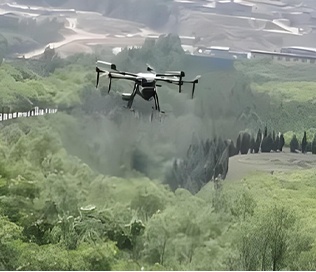


When evaluating high-performance lithium-ion batteries for industrial UAVs, energy density is often one of the first specifications buyers compare. A higher value in watt-hours per kilogram (Wh/kg) can indicate greater energy storage relative to weight, which is particularly important for drones operating with heavy payloads or extended flight-time requirements.
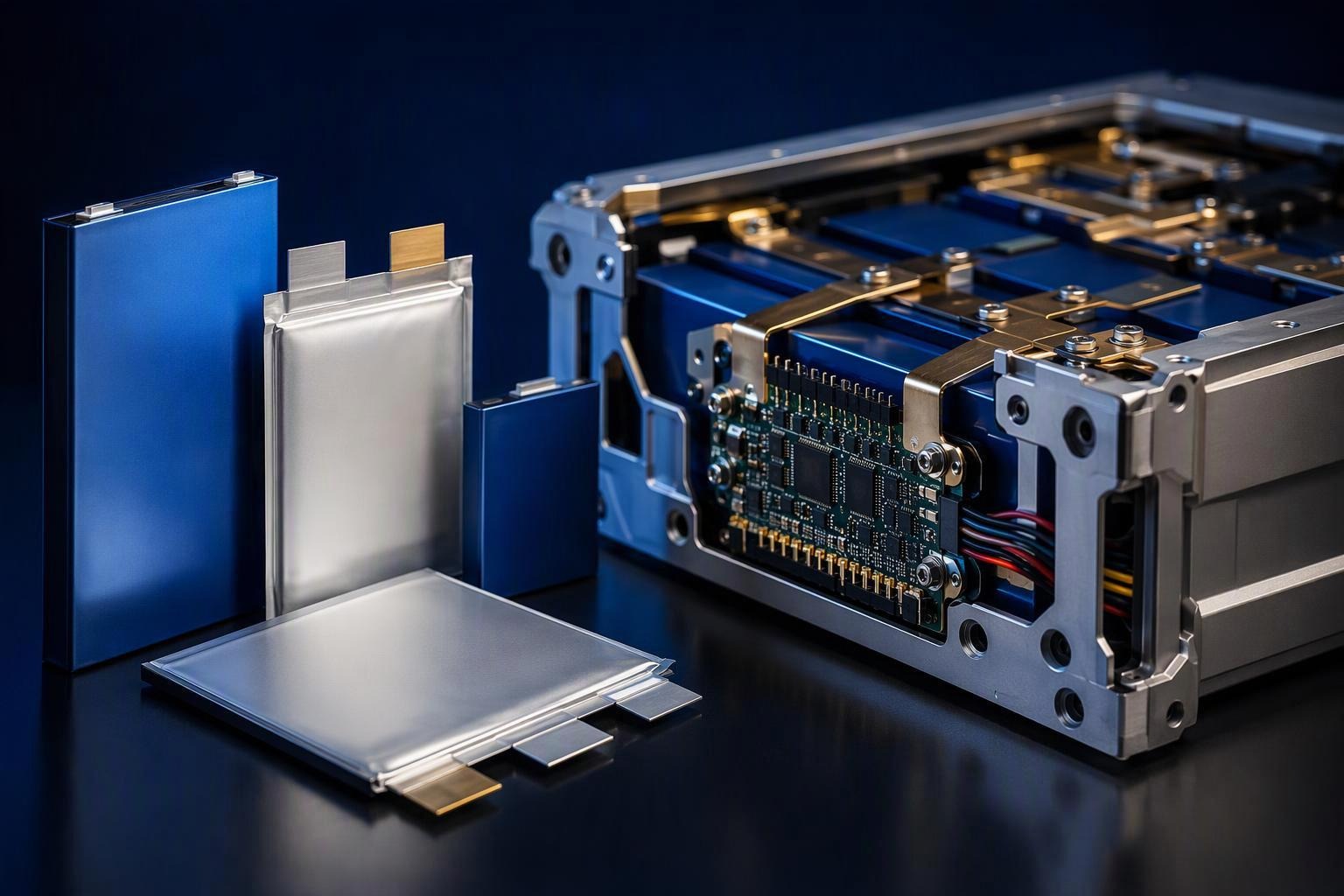
However, there is an important distinction that can easily be overlooked: cell-level energy density and pack-level energy density describe different things.
A battery cell may offer excellent specific energy, but the complete battery pack must also accommodate electrical connections, structural components, a battery management system (BMS), protective features, and other application-specific requirements. These components add weight and volume without directly increasing the energy stored in the cells.
For UAV manufacturers, procurement engineers, and industrial drone operators, understanding this difference is essential to making meaningful supplier comparisons.
1. What Is Cell-Level Energy Density?
Cell-level energy density measures the energy stored in an individual battery cell relative to its mass or volume.
Two commonly used metrics are:
- Gravimetric energy density (Wh/kg): Energy per unit mass.
- Volumetric energy density (Wh/L): Energy per unit volume.
For UAV applications, gravimetric energy density is particularly relevant because battery weight directly affects aircraft mass, payload capacity, and flight endurance. Volumetric energy density is also important when the aircraft has a restricted battery compartment.
Cell energy can be estimated from nominal voltage and rated capacity:
Cell energy (Wh) ≈ Nominal voltage (V) × Rated capacity (Ah)
For example, a lithium-ion cell rated at 3.7 V and 30 Ah has a nominal energy of:
3.7 V × 30 Ah = 111 Wh
If the cell weighs 250 g, or 0.25 kg, its nominal gravimetric energy density is:
111 Wh ÷ 0.25 kg = 444 Wh/kg
This is an illustrative calculation, not a specification for a particular commercial cell. Actual measured discharge energy may differ depending on the test method, discharge rate, temperature, and voltage cut-off.
The key point is that the calculation includes the cell itself, not the additional components required to turn individual cells into a complete battery pack.
2. What Is Pack-Level Energy Density?
Pack-level energy density measures the energy of the assembled battery pack relative to the total mass or volume included within the defined pack boundary.
For gravimetric energy density:
Pack energy density (Wh/kg) = Pack energy (Wh) ÷ Total pack mass (kg)
The total pack mass should reflect the complete assembly being evaluated, including applicable components such as:
- Battery cells.
- Busbars, cables, and electrical connectors.
- BMS and associated electronics.
- Housing, mounting brackets, and fasteners.
- Insulation, protective structures, and sealing components.
- Thermal-management components, where applicable.
The precise component list depends on the pack design. Buyers should confirm what the supplier has included in the quoted mass.
Consider a simplified example. Suppose a battery pack contains cells with a combined nominal energy of 1,110 Wh, while the complete pack weighs 3 kg.
Its nominal pack-level specific energy is:
1,110 Wh ÷ 3 kg = 370 Wh/kg
Even if the cells themselves have a higher specific energy, the assembled pack will have a lower value because the total mass includes components beyond the cells.
This difference is not necessarily a weakness in the battery design. Structural protection, electrical safety, thermal management, and mechanical reliability all have engineering requirements that must be considered alongside weight reduction.
3. Why Cell-Level and Pack-Level Figures Are Different
The gap between cell-level and pack-level energy density depends on the battery architecture, cell format, enclosure design, electrical configuration, and application requirements.
Structural and protective components
Individual cells require suitable mechanical support and protection. Depending on the application, the pack may need a rigid enclosure, vibration-resistant mounting, insulation, sealing, or impact protection.
For industrial UAVs, these features must be balanced against strict weight and dimensional constraints.
Electrical connections and BMS
Busbars, wiring, connectors, and the BMS contribute to the total pack mass. Their design also affects electrical resistance, current-carrying capability, monitoring, and protection.
Reducing component weight is useful only when the resulting design continues to satisfy the required electrical and safety specifications.
Thermal management
High-current discharge generates heat. Depending on cell performance and operating conditions, the pack may require thermal pathways, conductive interfaces, or other heat-management provisions.
A lightweight design must still maintain appropriate operating temperatures under the intended duty cycle.
Cell configuration and packaging efficiency
Series and parallel connections determine pack voltage, capacity, and current distribution. The arrangement of cells also affects how efficiently the available enclosure space is used.
A well-integrated design can reduce unnecessary structural mass and unused volume, but the achievable improvement depends on the application and its constraints.
For this reason, there is no single cell-to-pack conversion factor that applies to every UAV battery.
4. A Practical Comparison: Cell Energy Density vs Pack Energy Density
The following example illustrates why buyers should examine the complete battery rather than relying solely on a cell specification.
<text color=”secondary” size=”sm”>Illustrative figures only — not measured AervoEnergy product data.</text>
| Parameter | Cell-level reference | Complete battery pack |
|---|---|---|
| Energy basis | 1,110 Wh combined cell energy | 1,110 Wh nominal energy |
| Mass | 2.5 kg total cell mass | 3.0 kg total pack mass |
| Gravimetric energy density | 444 Wh/kg | 370 Wh/kg |
| Measurement boundary | Cells only | Complete pack |
In this example, the cells account for approximately 83.3% of the complete pack’s mass. The remaining mass comes from other pack components.
The pack-level specific energy is therefore lower than the cell-level figure, even though the nominal energy remains the same in this simplified calculation.
In a real product, the pack’s measured discharge energy may differ from the sum of the cells’ nominal energy because of operating limits, voltage behavior, cell variation, and test conditions. Buyers should use consistent energy definitions when making comparisons.
5. Which Metric Matters More for UAV Battery Selection?
Neither metric should be considered in isolation. The more relevant metric depends on the stage of development and the intended application.
Cell-level energy density is useful when comparing cell technologies, evaluating potential suppliers, or deciding which cells are suitable for a proposed battery design.
Pack-level energy density is more useful when evaluating the weight and energy performance of the battery assembly that will actually be installed in the aircraft.
Usable pack energy is particularly important when estimating flight endurance. Nominal energy does not mean that all of it will be available during every mission. Voltage cut-off limits, discharge rates, operating temperatures, reserve requirements, and battery aging can affect the energy available for flight.
For industrial and agricultural UAVs, buyers should also evaluate:
- Continuous and peak discharge current.
- Voltage stability under representative loads.
- Battery dimensions and mounting compatibility.
- Thermal performance during the intended flight profile.
- BMS functionality and electrical protection.
- Expected cycle life under specified operating conditions.
A battery with higher Wh/kg is not automatically the better choice if it cannot meet the aircraft’s power demand, fit the battery compartment, or maintain acceptable performance throughout the mission.
6. How Buyers Can Verify Energy Density Claims
When comparing battery suppliers, ask for the information needed to establish exactly what each quoted figure represents.
Confirm the measurement boundary
Determine whether the stated energy density applies to an electrode material, an individual cell, a module, or a complete battery pack.
Values from different integration levels should not be compared as if they describe the same product.
Check the energy basis
Ask whether the figure is based on nominal energy, measured discharge energy, or usable energy under defined operating limits.
These figures answer different questions and should be identified clearly in technical documents.
Verify the mass and volume
Confirm the cell mass or complete pack mass used in the calculation. For volumetric energy density, establish whether the dimensions include the enclosure, connectors, mounting features, and other components required for installation.
Review the test conditions
Discharge rate, temperature, voltage cut-off, and measurement method can affect reported results. Request the relevant test conditions and supporting data.
Evaluate the complete application
Finally, check whether the proposed battery can meet the aircraft’s voltage, capacity, current, weight, and dimensional requirements.
For demanding industrial UAV applications, a battery configuration should be assessed against the intended operating profile rather than selected solely on the basis of a headline energy-density number.
7. Balancing Energy Density, Power, and Reliability
Improving battery performance is not simply a matter of maximizing Wh/kg. A practical UAV battery must balance several interdependent requirements.
High energy density can help reduce battery mass or increase onboard energy within a fixed weight limit. High discharge capability helps the battery deliver the power needed during takeoff, climbing, and other demanding flight conditions. Mechanical integrity, electrical protection, and thermal management help support reliable operation in the intended environment.
These requirements may influence one another. For example, a design optimized for minimum weight may have different mechanical or thermal constraints from a pack designed for more severe vibration or environmental exposure.
The most appropriate solution therefore depends on the aircraft’s powertrain, payload, flight profile, installation space, and operating conditions.
For battery suppliers and UAV manufacturers, the objective is not to maximize a single specification at any cost. It is to achieve the right combination of energy, power, weight, dimensions, and reliability for the actual application.
8. Choosing a UAV Battery Solution Based on Real Requirements
At AervoEnergy, we support UAV battery cell supply and customized battery-pack solutions for industrial and agricultural drone applications.
Selecting a suitable configuration starts with understanding the aircraft’s technical requirements, including operating voltage, target capacity, continuous and peak discharge current, available installation space, and maximum allowable battery weight.
These parameters help determine which cell options and pack configurations warrant further evaluation.
For buyers comparing high-energy-density UAV batteries, we recommend reviewing cell specifications and complete-pack performance separately. A cell’s energy-density figure is an important starting point, but the final battery assembly must be evaluated using clearly defined mass boundaries, consistent energy calculations, and relevant application-specific testing.
Looking for a battery solution for your UAV project?
Share your required voltage, capacity, discharge rate, battery dimensions, and weight limit with AervoEnergy. Our team can review your requirements and discuss suitable cell options or customized battery-pack configurations for technical evaluation.
Contact AervoEnergy to discuss your UAV battery requirements.
SEO Settings
SEO Title: Cell-Level vs Pack-Level Energy Density: What Buyers Should Compare
Meta Description: Learn the difference between cell-level and pack-level energy density, how to calculate Wh/kg, and what UAV battery buyers should verify before selecting a battery solution.
Suggested URL Slug: cell-level-vs-pack-level-energy-density
Primary Keyword: cell-level vs pack-level energy density
Secondary Keywords: UAV battery energy density, battery pack specific energy, lithium-ion cell energy density, Wh/kg battery comparison, high-energy-density UAV battery, customized drone battery pack
Suggested Featured Image: A technical comparison showing an individual lithium-ion pouch cell beside a complete UAV battery pack, with the cell mass and pack mass boundaries clearly distinguished.