





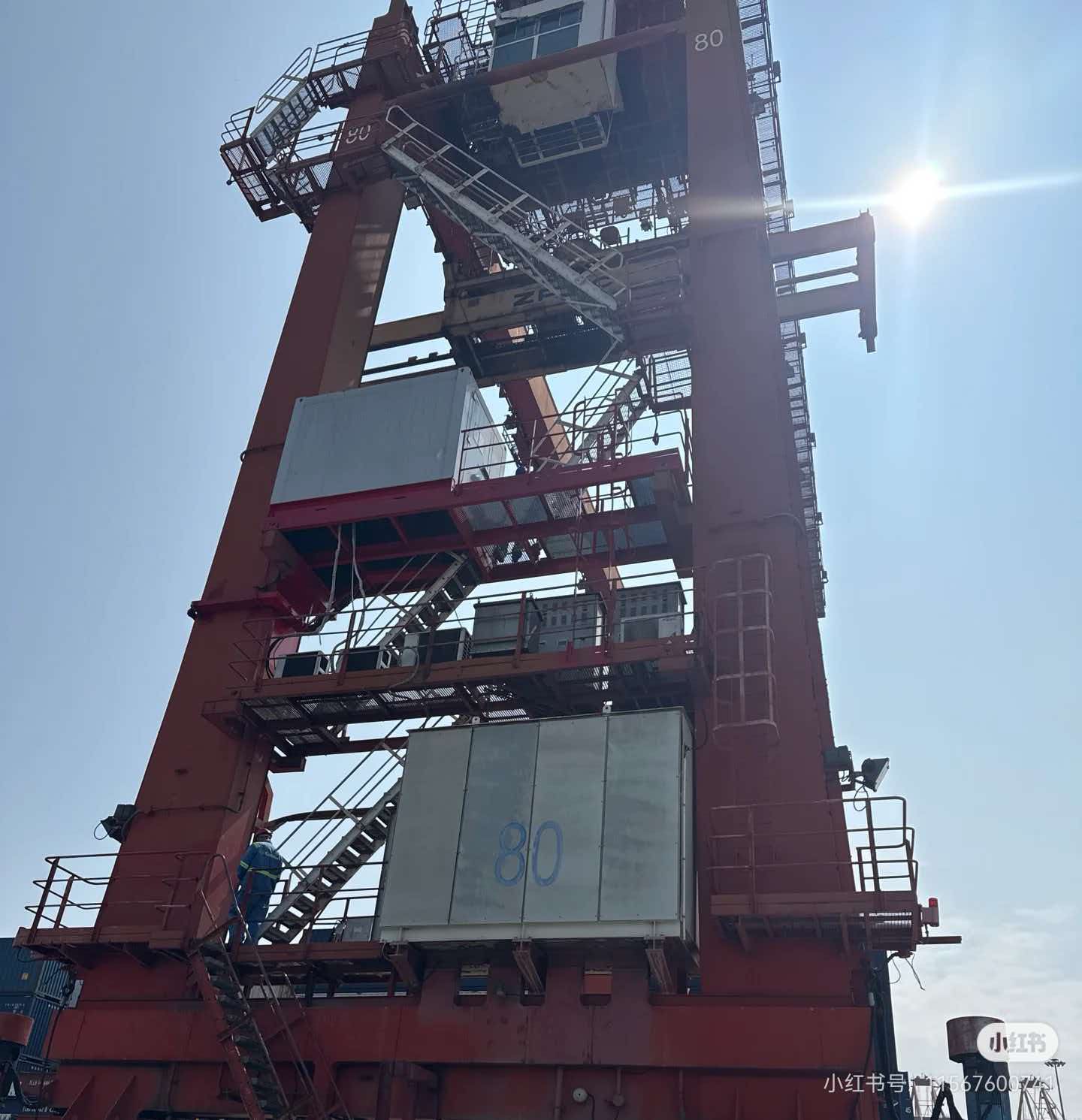
Over 40% Energy Savings Through Lithium-Ion Capacitor-Based Energy Recovery
Project Overview
AervoEnergy is pleased to showcase a successfully deployed lithium-ion capacitor (LIC) energy recovery project for port gantry cranes at a port terminal in Shenzhen, China.
The project integrates the LIC1850V2R7208-P, a 2.7V 2000F lithium-ion capacitor, into an industrial energy recovery system designed to capture regenerative energy generated during crane operations and provide high-power support during lifting cycles.
With a single energy storage module delivering approximately 50 kWh of energy capacity, the system has been implemented under real port operating conditions to support energy recovery, peak power compensation, and improved energy utilization.
On-site performance verification demonstrated electricity savings of over 40%, highlighting the potential of LIC-based energy storage solutions to improve energy efficiency in demanding port operations.
This project represents a practical application of lithium-ion capacitor technology in industrial energy management, moving beyond laboratory testing into real-world deployment.
Project Background: Energy Challenges in Port Gantry Crane Operations
Port gantry cranes are essential equipment in modern container terminals. Their operating cycles involve frequent lifting, lowering, acceleration, deceleration, and stopping.
These operating characteristics create significant energy consumption and power fluctuations.
During container lowering, the crane’s load generates gravitational potential energy. In conventional systems, a substantial portion of this energy may be dissipated as heat through braking mechanisms or inadequately utilized regenerative energy systems.
At the same time, lifting operations require high instantaneous power, resulting in substantial electrical demand and peak power fluctuations.
The key energy challenges include:
- Significant energy consumption during repeated lifting and lowering cycles.
- Regenerative energy generated during load lowering.
- High instantaneous power demand during lifting operations.
- Frequent start-stop cycles and dynamic load variations.
- Energy losses associated with conventional braking and power management systems.
To address these challenges, an energy storage solution must be capable of efficiently capturing regenerative energy while delivering rapid power support when required.
LIC-Based Energy Recovery and Power Compensation Solution
The Shenzhen port project adopts a lithium-ion capacitor-based energy storage solution to improve the energy utilization efficiency of gantry crane operations.
The system is designed around two primary functions.
1. Regenerative Energy Recovery
During container lowering and crane deceleration, regenerative energy is generated through the crane’s drive system.
The LIC energy storage system captures and stores this recoverable energy rather than allowing it to be dissipated unnecessarily.
The stored energy can subsequently be utilized during crane operation, helping reduce the demand for electricity from the grid.
This approach enables more effective utilization of energy generated throughout the crane’s operating cycle.
2. Lifting Pulse Power Compensation
Container lifting operations require substantial instantaneous power, particularly when handling heavy loads.
The LIC energy storage system provides rapid power compensation during high-demand lifting cycles.
By supporting transient power requirements, the system helps reduce peak electrical demand and improve power utilization within the crane’s operating system.
The combination of regenerative energy recovery and pulse power compensation creates a more efficient energy management approach for equipment characterized by frequent operation and dynamic power demand.
Project Deployment and On-Site Performance Verification
The energy recovery system has been deployed at a port terminal in Shenzhen, China, and validated under actual operating conditions.
The project demonstrates the practical feasibility of integrating LIC energy storage technology into port crane energy management systems.
Key project highlights include:
- Application: Port gantry crane energy recovery
- Project Location: Shenzhen, China
- Energy Storage Technology: Lithium-Ion Capacitor (LIC)
- LIC Cell Model: LIC1850V2R7208-P
- Cell Specifications: 2.7V, 2000F
- Single Module Energy Capacity: Approximately 50 kWh
- Primary Functions: Regenerative energy recovery and lifting pulse power compensation
- Operating Conditions: Frequent start-stop cycles and high-impact power loads
- Measured Energy Saving: Over 40% under the project’s actual operating conditions
The results demonstrate the effectiveness of the implemented solution in improving energy utilization in demanding industrial applications.
Note: The reported energy-saving figure represents the measured performance of this specific project. Actual results may vary depending on crane operating cycles, load profiles, system configuration, and site conditions.
Why Lithium-Ion Capacitors for Port Energy Recovery?
Lithium-ion capacitors combine characteristics of lithium-ion batteries and electric double-layer capacitors (EDLCs), making them a promising technology for applications requiring both energy storage and rapid power response.
For port gantry crane applications, LIC technology offers several potential advantages.
High Power Response
LIC technology is suitable for applications involving rapid charge and discharge cycles, including regenerative braking and instantaneous power compensation.
Efficient Regenerative Energy Utilization
The ability to absorb and release energy rapidly supports the recovery and reuse of energy generated during crane operation.
Adaptability to Dynamic Loads
Port gantry cranes operate under highly dynamic conditions, with frequent start-stop cycles and substantial changes in power demand.
LIC-based energy storage can be configured to support these demanding operating characteristics.
Industrial Energy Management Potential
By combining energy recovery with peak power compensation, LIC systems can contribute to reduced electricity consumption and improved energy utilization in industrial equipment.
The Shenzhen project provides a practical example of how these capabilities can be applied in real port operations.
Application Potential Beyond Port Gantry Cranes
The successful deployment of LIC-based energy recovery technology in port gantry cranes demonstrates its potential for other industrial applications involving regenerative energy and high-power fluctuations.
Potential applications include:
- Port container handling equipment
- Industrial cranes and hoisting systems
- Regenerative braking energy recovery systems
- Industrial automation equipment
- Heavy-duty lifting machinery
- High-power pulse load systems
- Industrial energy storage and power management
For equipment manufacturers and industrial system integrators, LIC technology offers an additional approach to addressing energy efficiency and dynamic power management challenges.
AervoEnergy: LIC Cells and Customized Energy Storage Solutions
AervoEnergy provides lithium-ion capacitor cells and energy storage solution support for industrial applications.
Our focus is on helping customers identify suitable energy storage technologies based on their operating conditions, power requirements, energy capacity, and system integration needs.
For port crane energy recovery and other industrial applications, we can support project evaluation involving:
- LIC cell selection
- Energy storage capacity configuration
- Charge and discharge power requirements
- Regenerative energy recovery scenarios
- Industrial power compensation applications
- Customized LIC module development
The Shenzhen port gantry crane project demonstrates the practical value of LIC technology in real-world industrial energy recovery.
We welcome inquiries from equipment manufacturers, engineering companies, system integrators, and industrial energy solution providers seeking to explore LIC-based energy recovery and power compensation solutions.
Contact AervoEnergy to discuss your industrial LIC energy storage project.